Your shopping cart is empty!




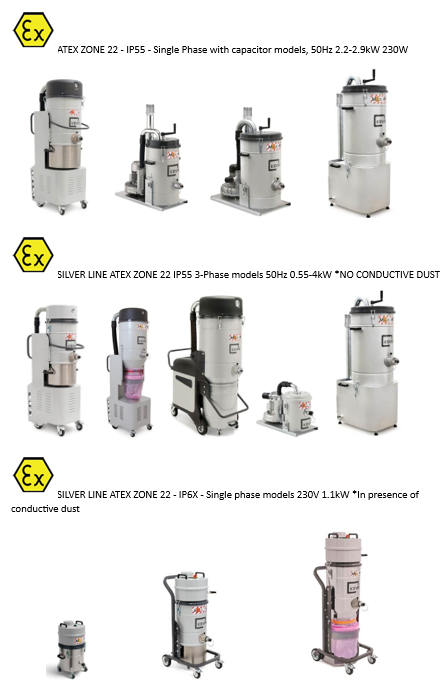
KEVAC ATEX SILVER LINE RANGE DOWNLOAD CATALOGUE HERE
Product Code: ATEX SILVER LINE
Availability:
Availability:
Pre-Order
Description
KEVAC ATEX SILVER LINE RANGE DOWNLOAD CATALOGUE HERE
MACHINES2CLEAN SALES SERVICE HIRE
Need a quote or parts? Call us 01236-782222.
Powerful, silent and robust. Compact, very stable and easy to handle.
Our ATEX Blue Line includes non-electric vacuum cleaners, powered by compressed air systems.
ATEX (for use in explosive atmospheres or/and with hazardous substances)
L-M-H filtration certification (for hazardous dust vacuuming)
Ignitable vacuum cleaners—often referred to as explosion-proof, ATEX-certified, or intrinsically safe vacuums—are designed to safely collect combustible, flammable, or hazardous debris that can ignite in a standard vacuum. They are engineered to prevent ignition sources such as electric sparks, static discharge, and overheating.
Key Debris Types for Ignitable Vacuums
These vacuums are used for materials that can create explosive dust clouds or fire hazards.
- Combustible Metal Dusts (Highly Explosive): Aluminium, magnesium, titanium, iron, and zinc.
- Carbonaceous Dusts: Coal, charcoal, coke, and carbon black.
- Food and Agricultural Dusts: Flour, sugar, grain, lactose, cocoa, powdered milk, spices, and animal feed.
- Chemical and Pharmaceutical Powders: Various synthetic organic materials and powdered chemicals.
- Wood and Paper Dust: Sawdust, sanding dust, and fine fiber dust.
- Flammable Liquids and Vapours: Solvents, fuels, oils, and chemical residues.
- Hazardous Solid Waste: Asbestos, silica, and other toxic fibres, often handled by Class H vacuums.
Industries Requiring These Vacuums
- Food processing (flour mills, bakeries).
- Metalworking and fabrication.
- Pharmaceutical manufacturing.
- Chemical and petrochemical plants.
- Woodworking and furniture manufacturing.
- Painting and coating industries.
Features of Ignitable/Explosion-Proof Vacuums
- ATEX/Ex Certification: Compliant with regulations for hazardous Zones (e.g., Zone 22 for dust).
- Anti-Static & Grounding: Components are grounded to prevent electrostatic charges.
- Spark-Proof Motors: Pneumatic (air-powered) or specifically designed electric motors.
- HEPA Filtration: Used to capture ultra-fine toxic or combustible particles.
- Construction: Stainless steel or conductive materials to prevent spark generation.
Key Differences
- Class I: For flammable vapours/gases.
- Class II: For combustible dust.
- Class III: For ignitable fibres.
- Wet/Dry: Some models can handle both, particularly needed for wet metal shavings.
Note: For extremely dangerous dust, such as some fine metal powders, special immersion separators are used to keep the material wet and inert within the vacuum.
Downloads
| KEVAC CATALOGUE ATEX SILVER LINE VACUUMS | 5.72MB | Download |
Tags:
